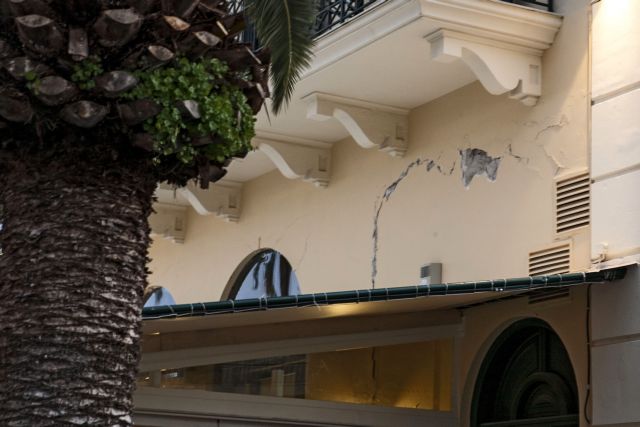
A rather powerful earthquake shook the island of Kefalonia and was felt in many parts of western regions of Greece, Albania and southern parts of Italy on Sunday afternoon. Multiple aftershocks were felt and fire brigade teams have been dispatched to document damages. The Minister of Interior Yannis Michelakis visited the island shortly after to be updated on the situation and recovery efforts.
The Geodynamic Institute of the Athens Observatory reported that the earthquake measured about 5.9 on the Richter scale and occurred at about 3.55pm and 179km west of Athens, with the epicenter located north of Argostoli and at a depth of 17km. The European-Mediterranean Seismological Centre (EMSC) estimated the earthquake’s magnitude at 6 on the Richter scale, with a depth of 24km.
The Lixouri area on the island suffered most damages in the earthquake, with the deputy mayor Evangelos Theofilatos reporting some residents had to seek refuge at the local gymnasium as damage at their houses had not yet been assessed. The Lixouri nursing home was also preemptively evacuated and it was announced that all schools on the islands would remain closed on Monday, in order to carry out the necessary inspections.
Aside from damaging houses and other buildings, the earthquake also caused some cracks and sedimentation in the road network near Argostoli, while the area of Paliki is experiencing power cuts. No serious injuries reported, although some residents were treated for minor injuries caused by heavy objects and broken windows.
The Ionian island was struck by a powerful earthquake in August of 1953, which leveled most of the island’s buildings. As a result, the majority of buildings on the island were rebuilt in compliance with anti-seismic regulations. Nevertheless, the island’s regional deputy governor Sotiris Kouris urged residents to remain calm and not return to their homes if they have visible damage.