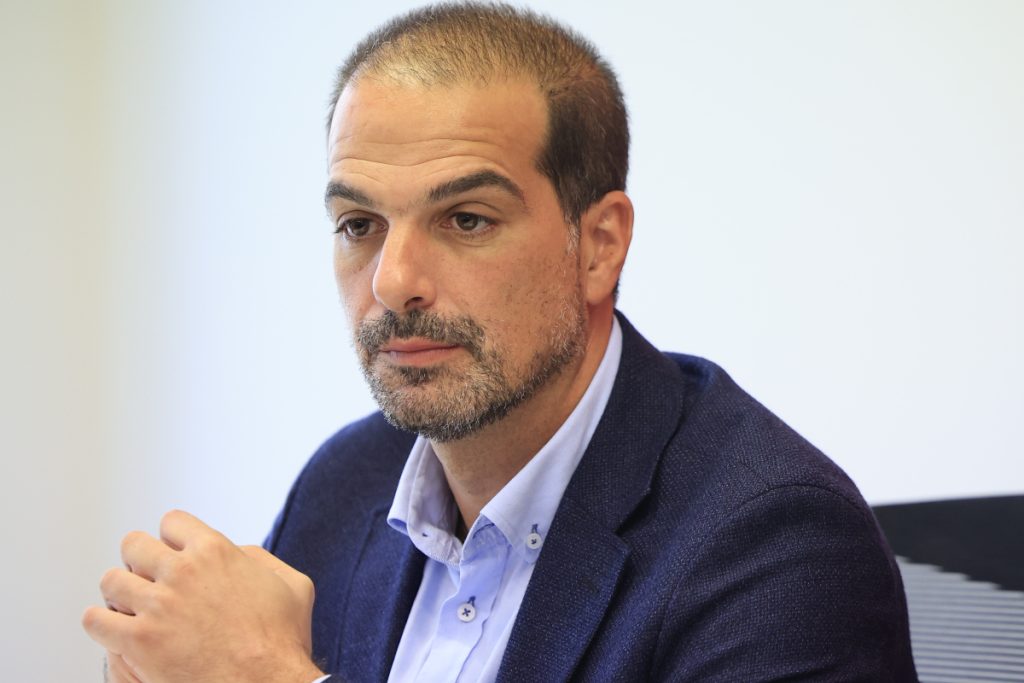
The Minister of Finances Mr. Yannis Stournaras had a tough time on Monday evening. Once again his counterparts expressed their suspicion towards Greece, judged him for not agreeing to measures for the next period and virtually ordered him to come to an agreement with Poul Tomsen by Sunday the latest.
There were no progress reports, no civilities, no praise, not one good word for Mr. Stournaras, just demands for measures and even more measures until you drop.
The financial conclave in Brussels barely recognizes the fiscal progress and when it does, it does so half-heartedly because it believes that these are temporary, precarious gains that are easily lost at the first opportunity.
That is the opinion of the European financial elite in Brussels for Greece and they treat our country and political leadership based on that.
They will not forget how Mr. Samaras helped develop the anti-bailout climate when he as in the opposition and hold Mr. Venizelos responsible for the delays and implications in the implementation of the stabilization program.
They don’t want to hear a word about Mr. Tsipras, they treat him as an enemy and doubter; they believe that he has not yet mastered European procedures and are waiting for him to win the elections and assume control of the country.
They won’t even make things any easier, politically speaking, for Mr. Stournaras whom they consider to be “one their own”, as he speaks they same language.
Overall one could say that they are treating the country and its leadership with great suspicion and are constantly discovering problems and omissions.
At midnight on Monday Mr. Dijsselbloem transferred all responsibility for the outcome of the negotiations to the Greek side, claiming that the troika worked hard in October and that now it is time for our country to fulfill its obligations!
One would reasonably ask why such a policy is being implemented on a country that has paid for and endured so much.
Is the call for the deregulation of the many small markets, from dairy to medicine and olive oil, even the capital deficits of Greek banks, enough to explain the stance of our European partners?
Obviously not. The award for Brussels and the troika after all these months of negotiations can be none other than the extension of the supervision and the country committing to a new bailout.
That is the goal of our European partners; they are after the control and long-term supervision because they do no trust the country and its political class.
Under these circumstances can Greece accept such a relationship of dependence and submission to Brussels?
And if so, can the country’s political class endure such a burden without facing the possibility of depreciation and self destruction?
In any case, Greece must be prepared for such a possibility: For a long term of dependence or long period of self-restriction in pursuit of financial and national independence.
Antonis Karakousis