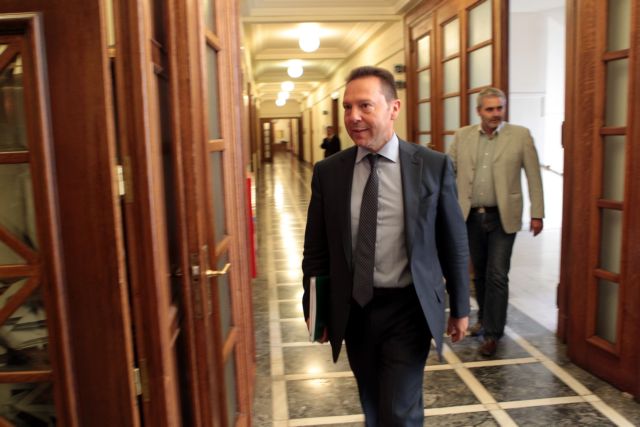
At today’s cabinet meeting the Minister of Finances Yannis Stournaras will present his proposals on the new midterm goals of 2014-2016, as well as alternatives to lifting the temporary ban on auctions of primary residences.
The Minister of Finances will also present the prior actions for the upcoming troika visit, namely the progress of the mobility scheme of the first 12,500 civil servants, the plan to restructure the defense industry, settling State debts to water companies EYDAP and EYATH ahead of their privatization and establishing a new code for lawyers.
Regarding the new midterm program, Mr. Stournaras is intent on covering the fiscal and budgetary and financial gaps by the end of 2016 in order to end recent discussions of a new bail out loan, generated by German reports.
This plan involves the gradual return to the markets for short-term borrowing (by issuing treasure bills) in 2014. This is related to the debt viability report that Minister of Finances will present to the troika representatives next month.
Mr. Stournaras’ plan is based on the assumption that after achieving a primary surplus by the end of this year, 2014 will see a return to growth and de-escalation of unemployment.
The government’s main goal is to convince its lenders that it can regain the trust of the markets and meet its obligation of paying 11 to 12 billion euros of interest a year, while relying mostly on its self. The plan also presupposes a number of retirements and layoffs in the public sector by the end of 2016.
The challenges faced
Mr. Stournaras’ plan has been dubbed as overtly optimistic and poses a number of challenges. One of the main challenges is the unified real estate tax, which could potentially bring an end to the controversial ‘temporary’ tax collected via DEI. The current plan involves 33 different tax rates, according to property value.
The auction of primary residences could also prove to be a critical matter, as the Minister must find an acceptable solution to protect those who cannot meet their obligations due to the financial circumstances.
Achieving the primary surplus is also beginning to cause headaches, as about 1,000,000 tax returns were submitted out of time and the tax services have yet to go over them. The extension of the submission deadline to the 30th of August is expected to help the situation.


